PNG Mallard Duck Clipart: A Versatile Resource for Creative Projects
A well-chosen clipart file can save hours of design work, especially when you need a polished image without starting from scratch. PNG Mallard Duck Clipart offers a specific set of features that make it a practical option for many projects, from digital content to printed materials. The package typically includes a single PNG file at 300 dpi, measuring 3000 by 3000 pixels, with a transparent background and no watermark. Understanding what these specifications mean in practice helps you decide whether this type of clipart fits your workflow or whether another format or subject might serve you better.
What Makes PNG Mallard Duck Clipart Distinct
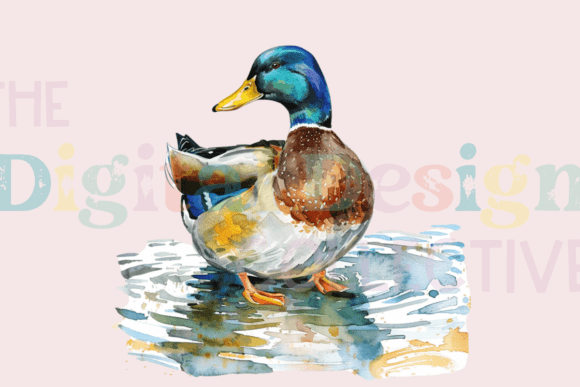
The combination of dimensions and resolution sets this clipart apart. At 3000 by 3000 pixels at 300 dpi, the image is large enough for most screen uses and for moderate-size prints. The transparent background means you can layer the duck onto different backgrounds without a harsh white box around it, a major advantage over JPEG images. The absence of a watermark also saves time because the file is ready for immediate use in presentations, websites, or personal projects. The subject itself—a mallard duck—is a widely recognized waterfowl with a distinctive iridescent green head and yellow bill, making it useful for nature-themed designs, educational materials, logos, or branding that implies tranquility or wildlife.
A single PNG file is a raster format, which captures every pixel of the original artwork. That gives you a detailed, finished look straight out of the package. However, it also means the image is fixed at that resolution. You cannot enlarge it beyond its native 3000 pixels without losing sharpness, so the clipart works best when the intended output size is within that range. For web graphics, digital scrapbooking, or flyers up to about 10 inches wide, the resolution is generous. For large banners or billboards, you would need a vector alternative.
Comparing PNG Mallard Duck Clipart with Other File Formats
When evaluating this clipart, it helps to contrast it with vector formats such as SVG or AI. Vector images use mathematical paths, so they scale infinitely without quality loss. A vector mallard duck would be ideal for a logo that needs to appear on a business card and a highway sign. PNG, by contrast, remains crisp only at or below its original pixel dimensions. If you expect to resize the duck repeatedly or need to edit individual shapes—like changing the color of the wing alone—a vector file would be more flexible.
JPEG files are smaller but lack transparency. If you place a JPEG duck onto a colored background, you will see a rectangular frame. For quick social media posts where you want a seamless composite, the transparent PNG is far easier. The tradeoff is file size. A 3000x3000 pixel PNG at 300 dpi may be several megabytes, which can affect load times on a website unless you compress it. You might need to save a web-optimized version for online use while keeping the original for print.
Other raster formats like TIFF offer higher color depth but are less commonly used in everyday projects. For most users, the PNG format strikes a good balance between quality, compatibility, and transparency support across browsers and software.
Strengths and Best-Fit Situations
PNG Mallard Duck Clipart excels in scenarios where you need a ready-to-use, high-quality image without further editing. For example, if you are creating a quick poster for a school nature event, you can place the duck on a sky-blue gradient background in minutes. The transparency means you do not have to carefully cut out the background yourself. Educators often use such clipart for worksheets or flashcards because the realistic detail of a mallard helps students identify the species.
The 300 dpi resolution also supports printing at decent sizes. Printing at 300 dpi, a 3000-pixel-wide image yields a print about 10 inches across. That is suitable for handouts, book covers, or small signage. The high pixel count also gives you some room to crop without losing all detail, which is useful if the duck needs to be placed in a tight frame.
Web designers may choose this clipart for blog posts about birdwatching, wetland conservation, or outdoor hobbies. Because the file is a single PNG, it loads quickly after compression and works seamlessly with CSS backgrounds. The predictable aspect ratio of a square layout (3000x3000) simplifies alignment when centering or positioning the duck.
Limitations and When to Consider Alternatives
The most notable limitation is the lack of scalability beyond 3000 pixels. If your project requires a mallard duck that spans 20 inches wide at print quality, a PNG will show pixelation. In that case, vector clipart or a high-resolution photograph would be better choices. Also, because the file is a single raster layer, you cannot separate the duck into components. For instance, you cannot easily change the color of the duck’s wing or adjust the beak shape without using a photo editor and making selections manually.
Another consideration is the subject itself. A mallard duck might not suit every theme. If you need a generic bird silhouette or a different species (like a wood duck or a cartoon duck), this specific clipart may not match. Similarly, for very stylized or modern branding, a realistic mallard might feel too traditional. Alternative clipart sets might include multiple species or stylistic variations, such as line art or watercolor effects.
File size can be a practical issue. A 3000x3000 PNG without compression can exceed 5 MB. For web use, you will likely need to run it through an optimizer to reduce load times. If you are embedding many such images on one page, you might consider using a single, smaller PNG of the duck or an SVG version that compresses more efficiently.
Key Decision Factors When Choosing PNG Mallard Duck Clipart
Before purchasing or downloading, ask yourself a few questions. First, what is the final output medium? For digital presentations and small prints, this clipart is a strong fit. For large-format print or continuous editing, vector is more forgiving. Second, how important is the transparent background? If you frequently composite images on different colored backgrounds, the PNG’s transparency is a major time-saver. Third, do you need flexibility to edit the artwork? If you plan to adjust colors, remove parts, or combine with other vector elements, consider a layered format instead.
Budget and licensing are also relevant. A single PNG file is often less expensive than a vector set or a subscription. For one-off projects or personal use, the cost may be negligible. For commercial use, verify that the clipart license covers your intended distribution—many affordable options do, but it is worth checking.
Practical comparison example: A teacher creating a handout about local ducks can use the PNG Mallard Duck Clipart to illustrate the side of a printed page. The 300 dpi ensures text and image look sharp on a standard printer. The same teacher building a large wall poster might need a vector file to maintain quality at poster size. For a blog header, the PNG works well after compression, but a designer building a responsive website might prefer an SVG that adapts to different screen widths without pixel loss.
Making an Informed Choice
No single clipart format satisfies every need. The PNG Mallard Duck Clipart occupies a practical middle ground: it offers high resolution, a clean transparent background, and immediate usability for common design tasks. Its strengths shine when you need a specific, recognizable wildlife image without the overhead of editing vector paths or handling multiple layers. Its weaknesses appear when scaling large or editing with extreme precision.
By understanding the tradeoffs between raster and vector, resolution and file size, and subject specificity, you can decide whether this clipart aligns with your project requirements. For a quick, attractive, and professional-looking mallard duck graphic, the PNG version is a reliable choice. For workflows that demand absolute flexibility or extreme enlargement, exploring vector alternatives or a different subject matter would serve you better.